Understanding Exponents and Multiplication Worksheets
Exponents and multiplication are fundamental concepts in mathematics that play a crucial role in various fields, including science, engineering, and finance. Understanding these concepts is essential for students as they progress through their education. Worksheets focused on exponents and multiplication provide an effective way for learners to practice and reinforce their skills. These worksheets can help students grasp the relationship between multiplication and exponents, making complex problems more manageable.
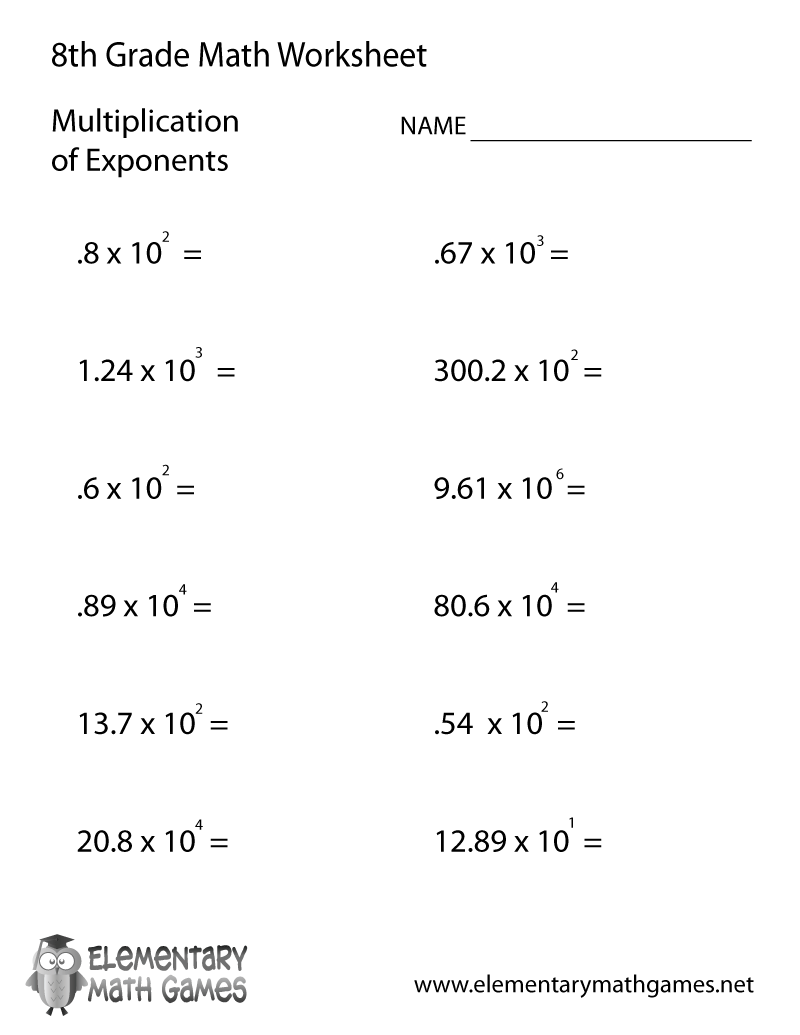
Incorporating exponents into multiplication problems allows students to explore mathematical properties such as the distributive property and the laws of exponents. By working through these worksheets, students can develop a deeper understanding of how to manipulate numbers efficiently. This article will delve into the importance of exponents and multiplication worksheets, highlighting their benefits and providing tips for effective learning.
Exponents and Multiplication Worksheet
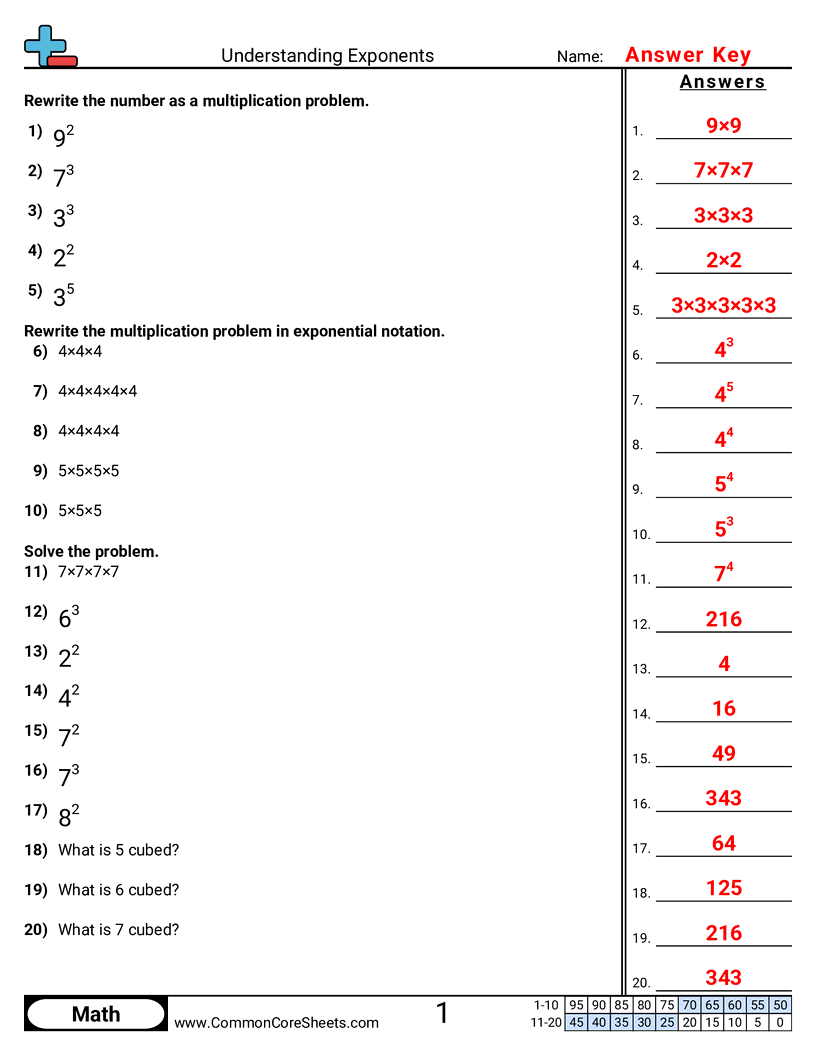
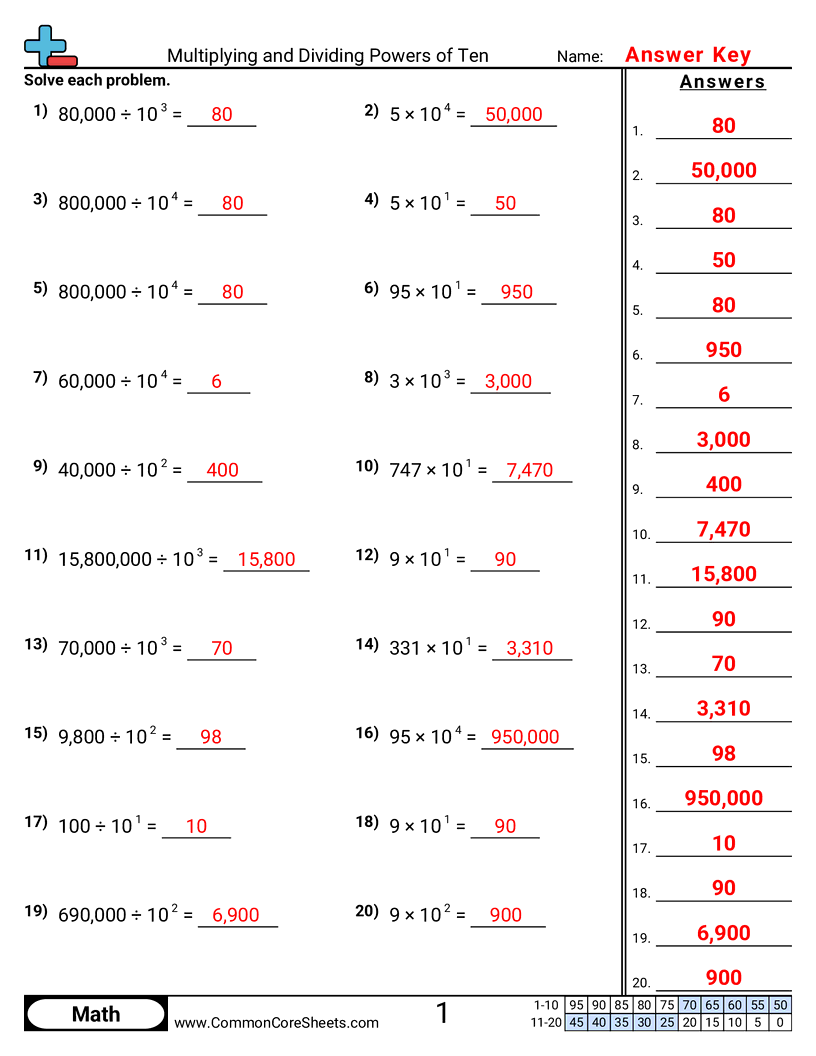
Exponents represent repeated multiplication of a number by itself. For example, 3² means 3 multiplied by itself, resulting in 9. When combined with multiplication, exponents can simplify calculations significantly. Worksheets that focus on these concepts often include problems that require students to apply the laws of exponents, such as multiplying powers with the same base or adding exponents when multiplying like bases.
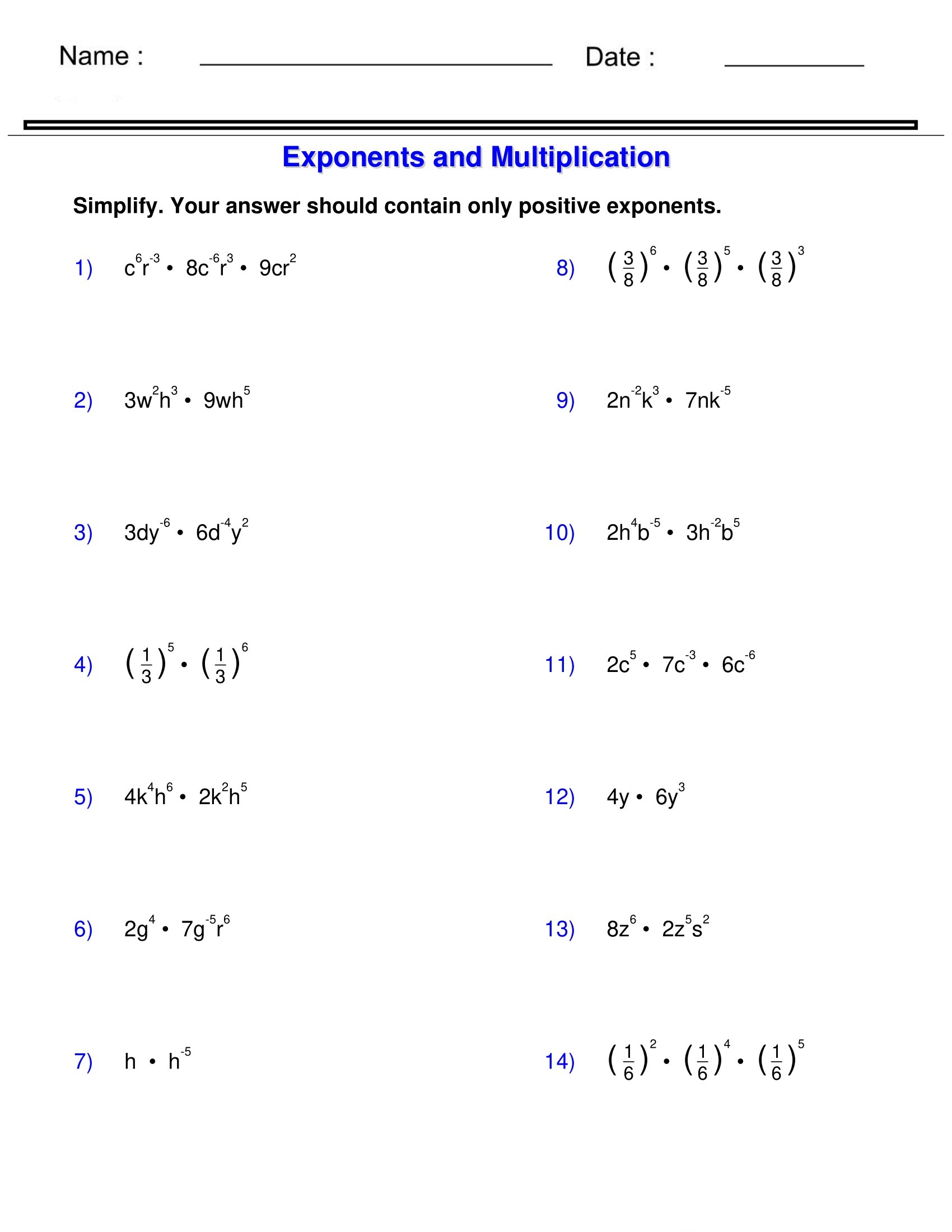
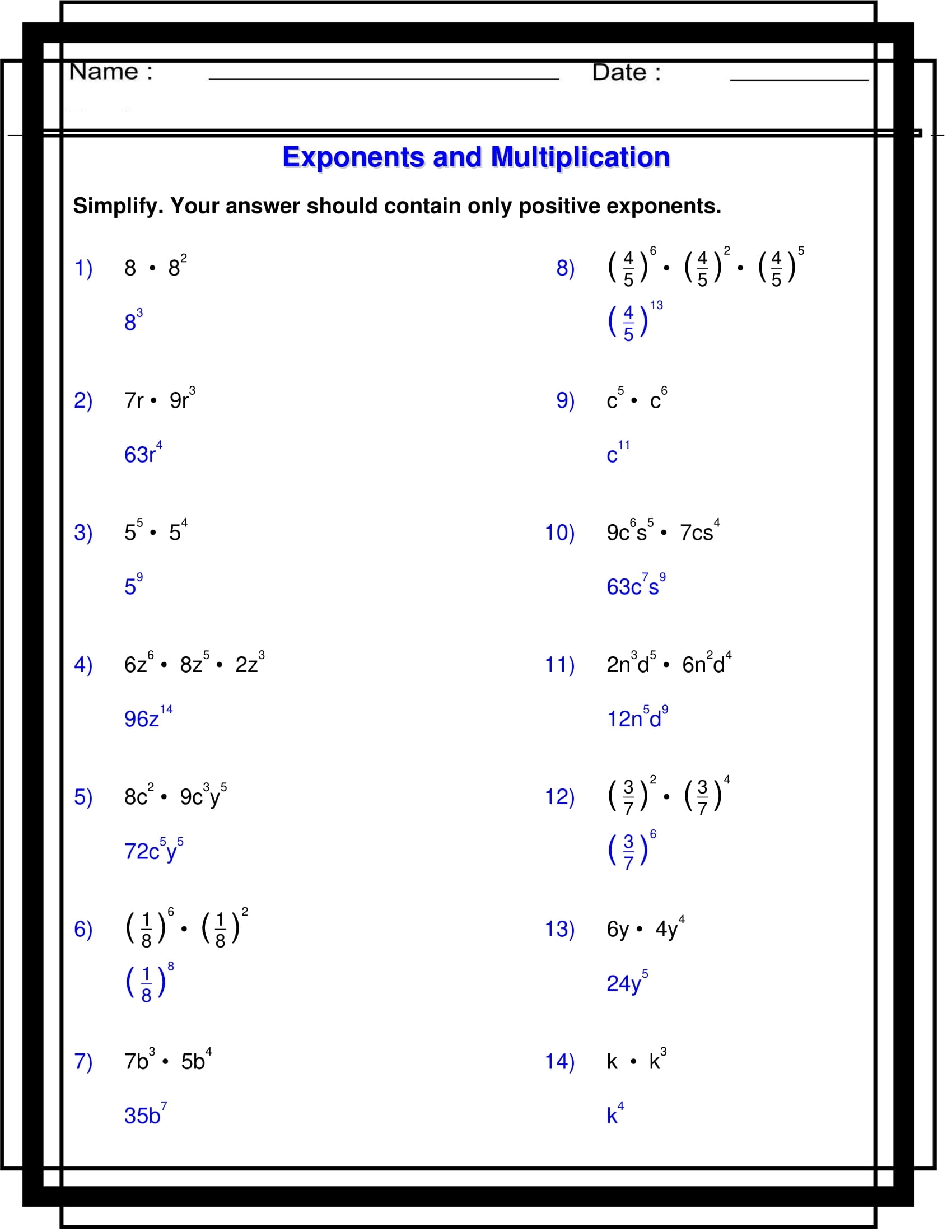
One common type of problem found in these worksheets is simplifying expressions involving both multiplication and exponents. For instance, students may encounter problems like 2³ × 2². Here, learners must recognize that they can add the exponents (3 + 2) to arrive at the final answer of 2⁵, which equals 32. This practice not only reinforces their understanding of exponents but also enhances their multiplication skills.
Another valuable aspect of these worksheets is their ability to cater to different learning styles. Visual learners may benefit from diagrams that illustrate exponent rules, while kinesthetic learners can engage with hands-on activities involving physical objects to represent multiplication and exponentiation. Additionally, incorporating real-life examples can make these concepts more relatable and easier to understand.
To maximize the effectiveness of exponents and multiplication worksheets, educators should encourage students to work collaboratively. Group activities can foster discussion and allow learners to share strategies for solving problems. Furthermore, providing immediate feedback helps students identify areas for improvement and reinforces their understanding of the material.
In conclusion, exponents and multiplication worksheets are invaluable tools for enhancing mathematical understanding among students. By practicing these concepts regularly, learners can build a strong foundation that will serve them well in more advanced mathematical studies. As they become proficient in manipulating exponents and performing multiplication tasks, they will gain confidence in their abilities and be better prepared for future challenges.
Download and Print exponents and multiplication worksheet Listed below